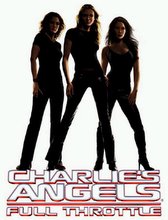
Thursday, October 26, 2006

BOOKS USEFUL TO ME:


1. Gauntlett, David (2002): Media, Gender and identity. West 35th Street, NY: Routledge.

This book is useful to me because it mentions my film Charlies angles with a case study that will be usefull to me. It also talks about the ideal women and focuses on women throughout the whole book which is realted to my topic and can use some things he wrote when i talk about pleasure.

2. Tasker, Yvonne (2004): Action and adventure cinema. Madison Avenue, NY: Routledge.

As my film is an action film it will be relevent to me as it includes some topic i need to cover and mentiones most of my texts that i am covering and so this book will help me will my research.

3. Lacey, Nick (2000): Narrative and Genre key concepts in media studies. Hampshire, UK: Macmillan.

This book mentions the films that i will be looking at such as Aliens as this is the first film to feature a female protagonist that will be relevent to my study.

4. Blandford, Steve, Grant, Barry Keith, Hillier, Jim (2001):The film studies dictionary. Madison Avenue, NY: Arnold.

This book contains some words that i will be able to use for my independent study.

5. Sarder, Ziauddin and Loon, Borin Van (2000): Introducing media studies. St. Leonards, NSW: Icon books UK.

This book contains information on some of the theories and theorists that i will be useing for my independent study so it will be relevent to me.

6. Sullivan, Tim O', Dutton, Brian, Rayner, Philip (2003): Studying the media, An introduction third edition. Madison Avenue, NY: Euston Road, London: Arnold.

This book contains information on representation and mentions some on the film that i will be covering in my independet study. It also mentions some theories and theorists i will be using so this will beneft me when i need research.

7. Philip, Rayner, Wall, Peter and Kruger, Stephen (2004): Media studies:the essential resource. New fetter Lane, London:Routledge.

This book mentions information on representation and has information on my chosen text and other texts i will be looking at. It also mentions the theorists and theories that i will be using.


8. Cook, Pam and Bernink, Mieke (1999): The cinema book 2nd edition. Stephen St, London: British film institute.

This book contains a lot of information that i will be able to gather together and pick out relvent things that will be useful to me when writing my independent study.

9. Bennett, Jacquie (2005): Media studies AS & A2. Gosport, Hants: Longman.

This book contains alot of information such as women and film and theorits and their theories that i found usefull.

10. Lacey, Nick (1998): Image and Representation key concepts in media studies. Hampshire, UK: Palgrave.

This book focuses on representation and will be able to use this book when i talk about represnetation of women especially in films.

11. Branston, Gill and Strafford, Ray (2003): The media students book-third edition. Madison Ave, NY,USA: Routledge.

This book has information on my chosen texts and other texts i will be using to help me. It also mentions further information on theorists i will be using and theories and this will help me widen my resaerch.

12. Kaplan, E. Ann (1998): Women in film noir. London: british film institute (BFI).

13. Langford, Barry (2005): Film genre- Hollywood and beyond. Edinburgh: Edinburgh university press.

This book foucuses on hollywood films and my film, Charlies angels is a hollywood film. The book has a section i found useful which was on womens film. it talks about women films and the elements used with examples which i foud useful.

14. Nelmes, Jill (1996): An introduction to film studies- third edition. London: Routledge.

This book was useful to me because it contains a lot of information on women and stereotypes on women and their role. This will be useful as my text,Charlies angels challenges the stereotypical roles of women.

15. Gilligan, Sarah (2003): Teaching women and film. London, UK: British film institute (BFI).

This book is entirely focused on women and a section helped that talked about my text and the pleasures the film gives the audience so this will help me as it is realted to my independent study question.

Books i need to look at:

16. Cook, Pam and Dodd, Philip (1993): Women and film: "sight and sound" reader.

This book is on women and may include useful information i will be able to use for my independent study.

17. Pitkin, Hanna Fenichel (1967): The concept of representation. publisher: University of Calafornia.

This book focuses on representation as my topic is on representation on women, it may include relevent information on representation on women or similar.

18. Delamont, Sara (2001): changing women, unchanged men?. Buckingham, UK: Open university press.

This book is based on how women have changed from the past to contemporary society and how men have stayed the same. This may be useful to be as i will be talking about roles of women and how they are changing.

Friday, October 20, 2006

Rise of the action film

The phenomenal success of the James Bond series in the 1960s and 1970s, helped to popularise the concept of the action film in recent years. The early Bond films were characterised by quick cutting, car chases, fist fights and ever more elaborate action sequences. The series also established the concept of the resourceful hero, who is able to dispatch the villains with a ready one-liner.
Despite the success of the Bond films, the action film did not become a dominant form in Hollywood until the 1980s and 1990s, when it was popularized by actors such as Arnold Schwarzenegger, Bruce Willis and Sylvester Stallone. The 1988 film Die Hard was particularly influential on the development of the genre in the following decade. In the movie, Bruce Willis plays a New York police detective who inadvertently becomes embroiled in a terrorist take-over of a Los Angeles office block. The film set a pattern for a host of imitators, like Under Siege (1992) or Air Force One (1997), which used the same formula in a different setting.
Action films tend to be expensive requiring big budget special effects and stunt work. Action films have mainly become a mostly-American genre, although there have been a significant number of action films from Hong Kong which are primarily modern variations of the martial arts film. Because of these roots, Hong Kong action films typically center on acrobatics by the protagonist while American action films typically feature big explosions and modern technology.


Current trends

Current trends in action film include a development toward more elaborate fight scenes, perhaps because of the success of Asian martial arts elements, such as kung fu and karate, in Western film. Actors in action movies are now much more skilled in the art and aesthetic of fighting than they have been in the past, apart from a few acknowledged fighters like Steven Seagal. Now, a distinction can be made between films that lean toward physical, agile fighting, such as The Transporter, and those that lean toward other common action film conventions, like explosions and plenty of gunfire, such as Lethal Weapon, although most action movies employ elements of both.
Several of the common action film conventions saw their birth in the release of James Bond series (containing many of the original elements of spy movies still seen today). One popular element is the car chase, a feature that is almost standard in action films. Bullitt and The French Connection were among the earliest films to present a car chase as an action set-piece.
Another genre staple employed by many action films is a suspenseful climax centered around a Mexican standoff between two leading characters.


Feminist theory

Feminist film theory has been used to analyze action movies, owing to their rare variance from a core archetype. The separation between the physical male who controls the scene and the look and the female, who is almost always the object of the look is very clear in most such films. Although female characters in most action films are nothing more than objects, a prize for the winner, hostages, loving wives and the like, there has been a move towards stronger female characters such as those in works by James Cameron and Kathryn Bigelow. However, in most action movies since the 1970s, the female character in an action movie is usually portrayed as incompetent and lacking in good judgment. These characters tend to unintentionally make life harder for the hero.

Female leads

The science-fiction action/horror movie Alien was the first action movie to feature a strong female protagonist, independent of a guiding male lead Alien has thus been considered a prototype for the Girl Power-effect that occurred in Hollywood towards the early 2000s when more and more action-movies with powerful female leads appeared from the comedic (e.g. Charlie's Angels) to the mainstream martial arts film (e.g. Kill Bill).
Effects of gaze

Gazing and seeing someone gaze upon another provides us with a lot of information about our relationship to the subjects, or the relationships between the subjects upon whom we gaze, or the situation in which the subjects are doing the gazing.
The mutuality of the gaze can reflect power structure, or the nature of a relationship between the subjects, as proposed by Catherine Lutz and Jane Collins, where this "tell[s] us who has the right and/or need to look at whom".
Gazing can often reflect emotion without speech - in Western culture, continued staring upon another can be quite unsettling upon the subject.
Although it may appear that "gaze" is merely looking at, Jonathan Schroeder tells us that "it signifies a psychological relationship of power, in which the gazer is superior to the object of the gaze". The gaze characterizes and displays the relationships between the subjects by looking.
This idea forms a basis of feminist analysis of texts.

Gaze and feminist theory

The gaze is used in feminist theory as a means to demonstrate power asymmetries by what is termed male gaze, whereby a man gazes at a woman. Such feminist theorists posit that since it is almost always the female who is being gazed upon by the male, the man exhibits power over the woman.
This form of gaze can be the sexual gaze by a man towards a woman (so called "making a pass"), or the gazing of an image of a woman in some text or in the media. Laura Mulvey identifies the action of 'possessing' a gaze as being an intrinsically male (the "male gaze"), and identifies the action of being gazed upon with the female. This relates to binaries of male/active, female/passive.
This idea of power relationships within the gaze can be continued to analyse gendered power relationships in the depictions of women in advertising. Some advertising presents women in a sexual manner, and it is argued that this degrades women because of the power that the gaze provides for heterosexual men viewing these advertisements. Furthermore, Erving Goffman in Gender Advertisements describes that in his study the placement of men was higher than that of women in an advertisement. This positioning forces the gaze asymmetrically, the male must look down to the woman, and the female up to the man.


Responses to "male gaze"

Male gaze in relation to feminist theory presents asymmetrical gaze as a means of exhibiting an unequal power relationship; that is, the male imposes an unwanted gaze upon the female. However, this may not necessarily be the case; many societies have women who enjoy being gazed upon, models and beauty pageants in Western society for example seem to welcome the male gaze. Some second-wave feminist viewpoints would argue whether these women are actually willing, noting that they may be merely seeking to conform to the hegemonic norms constructed to the benefit of male interests that further underline the power of the male gaze. Evolutionary biological explanations for the male gaze also exist.
The question of whether a female gaze exists in contrast to the male one arises naturally in considering the male gaze. Mulvey, the originator of the phrase "male gaze", argues that "the male figure cannot bear the burden of sexual objectification. Man is reluctant to gaze...". Nalini Paul describes Wide Sargasso Sea, where the character Antoinette views Rochester and places a garland upon him to appear as a hero, and "Rochester does not feel comfortable with having this role enforced upon him; thus he rejects it by removing the garland and crushing the flowers."
In the perspective of male gaze as merely possessing a gaze, the position of a female possessing the gaze is then the female assuming the male gaze. Eva-Maria Jacobsson supports this by describing a "female gaze" as "a mere cross identification with masculinity".
However, disregarding the viewpoint of gendered possession of gaze as proposed by Mulvey above, there is evidence to support a view of a female gaze - at least as an objectification of men - in texts such as advertisements and teenage magazines. The view that men are somehow reluctant to be gazed upon was also not necessarily supported, for example, at an exhibition called The Female Gaze, where female artists studied the male form. Therese Mulligan mentioned "[t]o get these men who had leered at her on the street to strike these poses was amazing. And you could tell that they loved being looked at by her. These guys aren't attractive, but they sure think they are."
The gaze can also be directed toward members of the same gender for several reasons, not all of which are sexual, such as in comparison of body image or in clothing.

Wednesday, October 18, 2006

SCOPOPHILIA:

Literally, the love of looking.
The term refers to the predominantly male gaze of Hollywood cinema, which enjoys objectfying women into mere objects to be looked at (rather than subjects with their own voice and subjectivity). The term, as used in feminist film criticism, is heavily influenced by both Freudian and Lacanian psychoanalysis.
Marxist feminism

Marxist feminism is a sub-type of feminist theory which focuses on the dismantling of capitalism as a way to liberate women. Marxist feminism states that capitalism, which gives rise to economic inequality, dependence, political confusion and ultimately unhealthy social relations between men and women, is the root of women's oppression.
According to
Marxist theory, in capitalist societies the individual is shaped by class relations; that is, people's capacities, needs and interests are seen to be determined by the mode of production that characterises the society they inhabit. Marxist feminists see gender inequality as determined ultimately by the capitalist mode of production. Gender oppression is class oppression and women's subordination is seen as a form of class oppression which is maintained (like racism) because it serves the interests of capital and the ruling class. Marxist feminists have extended traditional Marxist analysis by looking at domestic labour as well as wage work in order to support their position.
What a characteristics a typical male and female has:

Male: Tough, Hard and Sweaty

Female: Fragile, Soft and Fragant

Representation of femininity

Feminism has been a recognised social philosophy for more than thirty years, and the changes that have occurred in women's roles in western society during that time have been nothing short of phenomenal.

Representations of women across all media tend to highlight the following:
beauty (within narrow conventions)
size/physique (again, within narrow conventions)
sexuality (as expressed by the above)
emotional (as opposed to intellectual) dealings
relationships (as opposed to independence/freedom)


Representation of masculinity

'Masculinity' is a concept that is made up of more rigid stereotypes than femininity. Representations of men across all media tend to focus on the following:
Strength - physical and intellectual
Power
Sexual attractiveness (which may be based on the above)
Physique
Independence (of thought, action)


These are components of a wesite on Gender and Representation:
http://www.mediaknowall.com/gender.html

Saturday, October 14, 2006

Homework-blog buddies from 13C and 13D


My blog buddy from 13C is KIRANJIT

‘I’m The Deadliest Women In The World’, in particular reference to Kill Bill: Volume Two (2004) by Quentin Tarantino, how have women's roles in action films changed over the recent years?

Kiranjit’s independent study is focusing on the representation of women in action films and how they have changed, as the media typically associate the male to be the protagonist/dominant figure in the film. Her main text will be 'Kill Bill Volume Two' (2004) by Quentin Tarantino. Other texts that she will mention that relates to my study are Charlie's Angels: Full Throttle' (2003). She says in all these films women are represented differently for example in my main text, she says 'Charlie's Angels' women are represented as dominant and in control.

The areas of overlap in our studies are she has similar key words to me from the essential word dictionary such as binary oppositions, male gaze and the main key word I have used a lot is patriarchy.

She is even referring to my main text, Charlie’s angels- full throttle and I will be mentioning points on women becoming more in the active roles which are linked to her title.

We also mention similar theorists and theories such as Laura Mulvey and the feminist theory.

Her other text is on Tomb raider, which is also a text that I will be referring to.


My blog buddy from 13D is DINVEER

‘You Can’t Force A Woman Against Her Will’- with reference to ‘House of Flying Daggers’ (2004 d. Zhang Yimou), have women become the protagonists in action/adventure movies OR are they still perceived as inferior to men?

Her independent study will be focusing on the representations of women and their roles in action films. She has looked at reviews on ‘House of Flying Daggers’ and other texts which she will be referring to such as ‘Kill Bill’ which is one of the texts that I will be using for my independent study. She will be concentrating on the subject of the feminist theory by Laura Mulvey and her essay ‘Visual Pleasure and Narrative Cinema’.

The areas of overlaps in our independent studies are that she has similar key words such as kung fu, which is used to fight the villains, male gaze and protagonist.

The genre of her main text is action, which is the same genre of my main text, and she talks about women becoming protagonists in action films, which is a key issue I am going to be talking about in my independent study.

She also has similar theorist and theories that I have used for my independent study so I will be able to get information that will be useful and she will be able to do the same.

Both our films include female protagonists in action films so the male gaze theory will be applied and the active male and passive female theory will get challenged by the texts.

Monday, October 09, 2006

Blog buddies!!!

13C-Kiranjit is my blog buddy
13D- Dinveer is my blog buddy

Sunday, October 08, 2006

My 10 key words from the Essential Word Dictionary

The words that are relevant for my independent study:

1. Barthes, Roland (1915-1980)

He was a French academic responsible for applying and extending Saussure’s work on semiology to contemporary culture.

He explores the language of signs, their combinations paradigm choices into a construction of meanings and concept of denotation, connotation and myth which is applied to film.

Barthes also explores the structure of narrative, identifying 5 different codes which engage the audience. The most important is the enigma code and the action code, semic, symbolic and cultural codes.

The most important to my independent study is the enigma code. This is used throughout the film to engage the audience and keep them attracted to watch what happens next, as a result getting a large audience.

2 .Binary opposition:

This is a term used by Claude Levi-Strauss as part of an argument that narratives are structured around oppositional elements for example good ad evi, life and death, night and day, raw and cooked.

In contemporary media narratives, black and white, hero and villain represent binary oppositional forces. He says the audience is attracted by the dynamics of this conflict with the possible variations leading usually to the ultimate triumph of good.

Audiences are positioned in narratives to take sides and rewards by the success of the side they identified is positioned with.

This key word is relevant to my independent study because my film contains a lot of binary oppositions such as Good and Evil, Black and White, Hero and Villain, Male
and Female.

3. Femme fatale:

This is a French film noir theory. The theory is that a female character uses her sexuality, often in devious, disreputable, secretive ways, to achieve the ends she desires.

The femme fatale is a dangerous character whose sex appeal often disarms the male protagonist and allows her to manipulate the action.

This is a useful key word because it relates to Charlie’s angels-full throttle, coyote ugly, American pie-the wedding well. In those films the women are seen as sex objects to get what they desire.

In Charlie’s angels 2, the strip club, they are dancing in a seductive way so the male audience are distracted and so they can get something for their own benefits, they are using their bodies to distract the males.

4. Hollywood

Hollywood is part of the district of Los Angeles, California. This is the centre of the US film industry during the golden age of the studio system.

Hollywood remains a playground for the super rich and their glamorous celebrity’s lifestyle.

This key word is useful to my independent study because my main text, Charlie’s angels- full throttle is a Hollywood text and casts many celebrities to make it a successful film.


5 .Levi-Strauss, Claude

French structuralist anthropologist whose analyse of human culture. His narrative theory of binary oppositions is based on the essentials differences between such concepts as culture and nature, raw and cooked, good and evil. Narratives are based on oppositional and resolution of conflict. Audiences are positioned on the side that justifies their own cultural values and resolution reduces underlying anxiety about threats to their way of life.

His theory is relevant to my independent study as I have explained above why due to the binary oppositions that arise throughout the text.

6. Marxist feminism

This is seen from a feminist perspective which sees capitalism as the principle source of gender inequalities.

In a capitalist class hierarchy, women are seen as being subordinate to men and serving the male workforce in terms of low paid, low status employment and unpaid domestic labour and child rearing.

Domestic violence against women is seen to be result of the powerless male workforce. The media serves the interest of capitalism by reinforcing traditional gender roles and supporting the status quo created by the dominant ideology.

This key word is useful because it challenges this theory however was present in the past and I can use this theory to compare the past against the future according to gender roles and representation on women.

7. Mulvey, Laura

A feminist academic and media and film critic, responsible for developing theories of the male gaze in her 1975 essay ‘Visual pleasures and Narrative cinema’

Her theory is useful especially her essay on the male gaze. I also think her theory on passive female and active male is useful as my text challenges the theory as the females are the hero and protagonists.

8. Patriarchy

A male domination of the political, cultural and socioeconomic system.

Under patriarchy, male perspective and male achievements are valued and rewarded at the expense of the female. Female contributions to society are ignored and women are culturally and economically invisible, being defined solely by their relation to men.

Patriarchy is an important assumption behind some feminist film criticism, which sees the male domination of film discourse as evidence in the male gaze.

9. Scopophilia

This is a term used by the psychologist Sigmund Freud to describe ‘the pleasure of looking’

The term is used by Laura Mulvey in the development of her ‘male gaze’ theory in her essay Visual pleasure and narratives cinema.

10. Synergy

This is the coming together of two separate media texts in such a way as to benefit both.

Synergy usually means that the combination of elements has a greater effect than the individual elements would have alone. With media texts, for example this can mean that the simultaneous release of a film and a film sound track will stimulate greater consumer interest than if the products had been released separately.

This key word is useful to because my chosen text, Charlie’s angels full throttle has a soundtrack called independent women by Charlie’s angels but also in my other texts such as Coyote ugly, which LeAnn Rimes called cant fight the moonlight.

Friday, October 06, 2006

SELF-DIRECTED RESEARCH

The research I did myself for my independent study is as follows:

Ă˜
I added a plot summary so people who read my blog are aware of what the film (Charlie’s angels-Full trottle) may be about.

Ă˜
http://www.killermovies.com/c/charliesangels2/
This is a website I used with information on the film including pichures and clips from the film and characters, trailers and the director.

Ă˜ http://www.screenonline.org.uk/film/id/824060/index.html
This website is for the screenonline website that I found useful as it is based on women and film and mentions representation on women.

Ă˜ I put up a pichure of Charlie’s angels behind a flaming background because I thourght it looked nice and would make my blog look interesting to look at.

Ă˜ I chose 3 pichures from the film that would really help me answer my question on each protagonist of the film, then added a brief description of why they are on my blog and how they are useful.

Ă˜ Women in the 1950’s. This was independednt research that I found on women and how they were seen in that year which will be helpful when comparing.

Ă˜ Women in the 1960’s(TWICE because I found more useful information)

Ă˜ Found 5 reveiws on the film and decided to post them up, if it may help anyone else.

Ă˜ The feminist theory was a theory I was going to use so I decided to get some research on it and post it up.

Ă˜ Women in the 1970’s.

Ă˜ A pichure of the villain for people who havn’t seen the film.

Ă˜
A website on Laura Mulvey’s theory which will help me in my independent study on answering the question.

Ă˜ I got a pichure of a book that will be useful to me by David Gauntlett and the name of the book.

Ă˜
I got websites on theories such as marxism, feminist theory and a hegenomy website for information.

Ă˜ I then got a theorist for the marxism theory because he focuses on hegenomy.

Ă˜ Women in the 1980’s.

Ă˜ Women in the 1990’s

Ă˜ I got pichures of the other texts I will be using and pichure that will be helpful for my independent study and I explained why these clips from the film are useful.

Ă˜ I got a pichure of a protest for equality for males and females.

Ă˜ Women in the 1970’s (again!!!) but on work and equal pay.

Ă˜ http://www.isis.aust.com/iwd/stevens/70s80s.htm
this website is on women in the past and what was happening in that decade.

Ă˜ Women in 2000 on working and statistics on how many women now work compared to before.

Ă˜ A pichure of the 3 angels together for charlies angels-full throttle

Ă˜
A pichure of a media studies AS and A2 book that I will be using for my independent study.

Ă˜ 4 websites that I found on women that will be relevent for my independent study.

Ă˜
A pichure on a book called ‘visual and other pleasures’ by Laura Mulvey with a mini description of the book.

Ă˜ http://www.screenonline.org.uk/film/id/824016/index.html

I used this website and got a msall pasage from it that is relevent to my iondependent study on women. I also posted a reason of why I posted this website.

Monday, October 02, 2006

Charlie’s Angels- Full Throttle
Scene at the STRIP CLUB!!!!

The scene starts off as a pan shot of the outside of a strip club. We are then taken inside to the strip club called the treasure chest. The treasure chest can connote undercover, secret and mystery. The angels are there to get something from the villain while undercover so it related well with the name. The music starts off with fingers clicking. This builds tension and suspense because the audience are unaware of what they are up to or what they are going to do. The music is very jumpy at first, creating a welcomed and warming atmosphere. This is then changed to the pink panther song and are dancing to please the men reinforcing the ‘male gaze’. The pink panther song can be associated with a suspenseful and creates the atmosphere of something sneaky as a result building tension and enigmas (Barthe’s enigma codes). This relates to the angels and the part they play in the scene. They are being sneaking around to get what they want using their bodies. The music is parallel to the scene and diegetic on screen music is used to the audience fell as though they are there because whatever music they here, the audience can hear.

The colour red is used throughout which symbolises the themes of love and romance. Reflects the scenes of them flirting with the enemy to get what they want. A variety of shots are used in the scenes such as a high angle shot used when the girls are together and showing the arses to the men. The high angle shot can represent power to the audience rather than the angles because it seems as though we are positioned to be higher than them. It can also represent dominancy of men because men would enjoy watching the scene are higher than the angels who are dancing around showing flesh as a result reinforcing a patriarchal society.

The men are cheering the girls on the stage who are performing for the men, reinforcing patriarchal society because it shows that men have the power and authority over woman. The facial expressions of the men and the dancers are smiling as if they are enjoying what they are doing. The type of clothing they wore was black, netted, short and leather. This is the ideal clothes of what men would enjoy so it entertains and pleasures men. They are using their bodies to please men and for their own benefits so they think their bodies are like a drug where they can achieve anything if the men are pleased.

The genre of the film and scene is of action and can tell this because they are on a mission which is a convention of an action film. Romance can also be a genre. The final genre can be adventure. The iconography used is the whip, blindfold and a pole. These are all conventions seen in romance films. The iconography can represent woman dominance because they are controlling men using them therefore challenging a patriarchal society.

The females in the scene are being represented as sex objects. This means that they are in the passive role rather than the active role which is what the protagonists are in actions films. As they are in the passive roles they are conforming to the historical woman who are seen to follow the men and in the passive role. This leads to the ‘male gaze’. The males in the strip club cheering on the woman are watching the woman entertain them for their own pleasure so the women are seen as ‘objects of desire’. Stereotypes are reinforced in the scenes such as where Cameron Diaz does the stereotypical ‘airhead’ giggle and blink innocently being the subject of the ‘male gaze’. The scene is constructed to entertain the male audiences but the females to sympathise with the woman asking themselves “what are they doing”?.

The primary audience of the films would be males and females of the age of 17 and over. This is because anyone under would not understand the scene well. The male are target audiences because of the ‘male gaze’ and the scenes that are suitable for them to watch for their pleasure and entertainment. Females would be the other target audience because of the dominance such as the females being protagonists in the film changing the normal male as being in the active role challenging patriarchy. The secondary audience would be fans of the characters and fans of the genre. Ethnic minorities are used to show that all people are as pretty as each other plus the protagonist Alex. Voyeurism for males on woman is seen for their pleasures.

Multi-culturalism is seen to reflect modern society as countries like America are becoming more multi- culturalism. Women have become as equal as men so it challenges patriarchy.

A closed narrative is used with a resolution for the scenes which is when they manage to get the keys and pass from the villain for the Todorov’s theory. A linear narrative is used in that seen but not in the entire film. Narrative roles are present in the scene and binary opposition during the confrontation with the villain. Enigma codes are used throughout the scenes as the audience are unaware of what’s going on or what they want to do until they have done it.


Cameron Diaz is shown as the ‘dumb’ blond girl who is stereotypical of blonds to be represented. She is the main target who in the scene is getting the most attention and is shown as a distraction as she is shown naked in the scene and is shown in a big glass where she is pouring liquid over herself reinforcing the ‘male gaze’. The scene would have cost a lot of money because the pussycat dolls featured dancing in the background and a lot of expensive props were used such as the massive glass Diaz was sitting in.

The women dancing are shown to have power to a certain extent because they use whips and blindfolds which are used for leadership purposes. In the past the men had the power and authority to control women, placing them in the active roles and the females in the passive roles, however in the scene the angels are in the active roles and the protagonist, changing gender roles in contemporary society.

Friday, September 29, 2006

Female protagonists...

It is widely felt that female characters in film have been restricted to the easy categories that classical narratives and familiar genres demand of them (the typical complaint is that women in films are either 'virgins, mothers or whores'). There is certainly some truth in this view. However, across the history of British cinema we can see the development of an impressive variety of female characters and protagonists.

http://www.screenonline.org.uk/film/id/824016/index.html

This is taken from the screenonline website on woman being the protagonists in films recently. It gives information such as how more females now have the protagonists part.
ECONOMIC CONTEXT
Below shows the amount of money Charlie's angels 2 made in a chart of 100 films. It came 35 telling me that it was a successful film.

32.Aladdin
$21,142,730,5969

33.Enemy of the State
$20,990,391,8038

34.The Lion King
$20,763,220,9428

35.Charlie's Angels: Full Throttle
$20,523,363,5098

36.A Time to Kill
$20,292,806,230937

FURTHER INFORMATION!!!
Released in US
June 27, 2003

Total US Gross
$100,814,328

Production Budget
$120,000,000

Prints and Advertising Budget
$40,000,000

Worldwide Gross
$227,200,000

MPAA Rating:PG-13 for action violence, sensuality and language/innuendo
Running Time:106 minutes
Highest Combined Star Gross:
35
Franchises:Charlie's Angels
Genres:Gratuitous Cameos, Visual Effects
Distributed by:Sony Pictures
Source:Sequel
Major Genre:Adventure
Country:United States
Production Method:Live Action
Creative Type:Contemporary Fiction
Director:
McG

Thursday, September 28, 2006

Claude Lévi-Strauss


Claude Lévi-Strauss born November 28, 1908 a French anthropologist who developed structuralism as a method of understanding human society and culture.
LAURA MULVEY


This is a pichure of Laura Mulvey!!!


Laura Mulvey (born August 15, 1941) is a British feminist film theorist. She was educated at Oxford and is currently professor of film and media studies at Birkbeck College, London She worked at the British Film Institute for many years before taking up her current position.

Laura Mulvey's theory is relevant to me because her theory is on the 'MALE GAZE' and could be useful as my independent study focuses on representation of woman and how they are seen as sex objects to entertain and pleasure men.

Mulvey's best known for her essay on "visual pleasures and narrative cinema". She argues that in Hollywood cinema males are there for the figure of the woman on screen as the object of desire. Viewers are made to identify with the protagonist of the film, who tends to be male. Meanwhile, female characters are, according to Mulvey, coded "to-be-looked-at-ness"

She also mentions the active/male and passive/female leading to the 'male gaze'. In my chosen text Charlie's Angels 2 they are shown to entertain men using their bodies such as when they pole dance to distract the villain.

Wednesday, September 27, 2006

LAURA MULVEY


THIS IS LAURA MULVEY!!!


The reason im going to use laura mulvet as one of my theorists is because her theory on 'MALE GAZE' is relevent to my independent study topic as im focusing on females being represented as sex objects to entertain and pleasure men.

In Mulvey's best known essay, 'Visual and othe pleasures' she argues that woman in films are on the screens as a object of desire. She says that in classical Hoolywood cinema, viewers are encouraged to identify with the protagonist of the film, who tends to be a man. Meanwhile, female characters are, according to Mulvey are there to-be-looked-at-ness.

From the showgirl to the topless bar made, the body of the woman is used to make a profit from the male’s sexual desire. The body itself becomes an object of desire for a man, and the amount it signifies, is merely sex.

Monday, September 25, 2006

WIDER CONTEXT-ECONOMIC

this is another webite that will be useful to be so i can tell how successful it was and how much money was spent on the film!!!

http://www.the-numbers.com/movies/2003/CHAR2.php
This is the website that tells be how much the film cost to make and some background information!!!

wider context- Economic

http://en.wikipedia.org/wiki/Charlie's_Angels:_Full_Throttle

Saturday, September 23, 2006

http://fp.advertising.msn.com/wwdocs/user/es-es/research/1

This is a power point of charlies angels i found on the internet with information on audience and budget. It includes things such as pie charts and relevent information.
Google Print
http://books.google.com/

Representation on women-google book search
http://books.google.com/books?q=representation+on+women%20&spell=1&oi=spell

This is a website i found by going on to google websearch to see all the different books i could use to help me to give me information on representation on women for my independent study.
BFI Research Guides
http://www.bfi.org.uk/filmtvinfo/library/publications/16+/

16+ source guides: Strong Women
http://www.bfi.org.uk/filmtvinfo/library/publications/16+/strongwomen.html

This website is useful because it has some information on woman and how they are just as strong as men and how their roles are changing.
http://www.aber.ac.uk/media/
The Media and Communications Studies Site

The Portrayal of Women on Television
http://www.aber.ac.uk/media/Students/hzi9401.html

This is amother website form the del.icio.us tags that i found useful. The actual website is right at the top but the link i found useful is shown below it. This website talks about woman shown on the television and can be useful because of the information which is useful to my independent study.

Friday, September 22, 2006

BBC NEWS: Entertainment
http://news.bbc.co.uk/1/hi/entertainment/default.stm

http://www.bbc.co.uk/kent/films/reviews/charlies_angels.shtml

Diaz, too, doesn't see her spark snuffed totally by the dire material. But she's too good an actress for this drivel - a fine, charismatic performer whose $20-million role just requires her to wear very little and shake her backside at McG's hyperactive camera. Some call it girl power. Others demeaning.
Screenonline: UK Film & TV Archive
http://www.screenonline.org.uk/

This is a very useful site because it talks about woman and film in the past helping me with the representation with the wider context, (historical to be specific)
Below is the link to the website

http://www.screenonline.org.uk/film/id/824060/index.html
Mediaknowall: Webguide for Media Students

http://mediaknowall.com/index.html

This website is very important because it has relevent information on gender representation for my independent study. It tells me in a table what a typical male would be and a typical female.

http://mediaknowall.com/gender.html

Above is the link form the actual website on gender representations.
http://scf.ifl.net/cgi-local/snpfiltered.pl?t=c&u=http://www.aber.ac.uk/media/Documents/gaze/gaze09.html

This website is useful because it gives information on the gaze.
http://theoryhead.com/gender/

This link is useful because it is about the theorist that im going to use, David Gauntlett and will be useful to me as it has information for my independent study.
Below are some links i got from the website:

http://theoryhead.com/gender/about.htm

http://theoryhead.com/gender/extract.htm
http://www.jahsonic.com/2006Feb.html
This is another website that i decided to use for my independent study because it explains all the theories that will be relevent to my study.

http://www.jahsonic.com/Feminism.html

The link above is for the feminist theory that i got from the website and found useful to my independent study.
http://uk.rottentomatoes.com/
This is the website from the del.icio.us tags of rotten tomatoes!!!

Below are 2 film reviews and a a section form each that i found useful for my independent study and below that is the link for the actual review.

Full Throttle" isn't about any rational story; it's about Diaz, Barrymore and Liu wearing as many outfits as possible, winning a series of fights while looking sexy and uttering catchphrases, and generally treating filmgoers as though the audience members all have attention-deficit (hyperactivity) disorder.

http://regulus.azstarnet.com/entertainment/story.php?section=movies&subsection=movies_reviews&title=Charlie's%20Angels:%20Full%20Throttle

Charlie's Angels: Full Throttle" is rated PG-13 for violence (fist fights, martial-arts combat, gunplay, stabbings, explosive mayhem and violence against women), crude sexual humor (including innuendo and sexual references), scattered use of strong profanity and gratuitous shots of women clad in bikinis and other scanty clothing. Running time: 105 minutes.

http://deseretnews.com/movies/view/1,1257,355000204,00.html

Thursday, September 21, 2006

5 key words useful to my independent study

Pleasure
This is motivating factor in the consumption of media texts.

Pleasure has often been ignored by researchers seeking to explain the motivation of audiences but is reflected in uses and gratifications theory, self-gratifying and consumption orientated cultural environment

This key word is useful to my independent study because it is included in my question and my whole study focuses on pleasure and how films pleasure men to entertain them.


Feminism
This is political movement to advance the status of women by challenging values, social constructions and socioeconomic practices which disadvantage women and favour men.

The movement emerged from the liberations culture of the 1960’s, although individual feminists argued for women’s rights from a much earlier time.

Feminism has provided an important perspective for the critique of media products, especially from the standpoint of representation and has sought to challenge dominant ideologies which reinforce patriarchal values.

Feminism encompasses various perspectives, e.g. black feminism, liberal feminism, Marxist feminism, radical feminism and post-feminism.

This is an important key word because my independent study it focuses on representation on women and a talk about feminism and how the roles of woman is changing in contemporary society.


Male gaze
Male gaze a term used by Laura Mulvey in her essay ‘Visual pleasures and narrative cinema’ (1975). This is what she used to describe what she saw as the male point of view adopted by the cinema for the benefit of an assumed male audience.

Mulvey viewed the practice of the cinema lingering on woman’s bodies as evidence that woman were being viewed as sex objects for the gratification of men. She argued that the central active characters in films are male and that the male audience identifies with them in their viewing of the passive females. Woman in the audience are also positioned by the narrative to identify with the male gaze and see the world through male eyes.

This is useful because I will be mentioning Laura mulvey’s theory on male gaze because I am going to do my study on women being represented as sex objects and how the male audience views them.


Representation
This is the process whereby the media construct versions of people, places and events in images, words or sound for transmission through media texts to an audience.

Representation provides models of how we see gender, social groups, individuals and aspects of the world we all inhabit. They are ideological in that they are constructed within a framework of values and beliefs. Representations are therefore mediated and reflect the values systems of their sources. No representation is ever real, only a version of the real.

Representations are part of cultural mythology and reflect deep-seated values and beliefs, e.g. of such places as the north of England, Scotland and America.

Representation is the key to many media debates and is usually described as being positive or negative, depending on the view of the group being represented. Achieving positive representations (versions that they agree and approve of) has been a goal of minorities groups who have criticised the perceived negatively of media stereotypes e.g. gays, ethnic minorities, religious minorities, disability groups and woman.

My study is on the representation of woman in films and how they are being represented by the audience especially the male audience.

Sexism
A representation that discriminates on the basis of sex, especially against woman, which is seen to derive from and sustain patriarchy.

Some feminists would see any media representation of woman that confirmed a stereotype as sexist, for example, the display of women’s bodies as sex objects in lad’s magazines for the entertainment of men.

In a post-feminists environment, challenges are launched at representations of men that show them as sex objects or as being humiliated at the hands of women.

This is a key word because males are seen to be dominating (patriarchy) and sexist against females. Stereotype on woman are sometimes seen as sexist such as woman’s bodies displayed as sex objects in male magazines to entertain them.

Wednesday, September 20, 2006

Information from my power point presentation!!!

DAVID GAUNTLETT

•Argues that in contemporary society, gender roles are more complex and that the media reflects this.
•He points out that female role models today are often glamorous as well as successful in a way that they were previously not.
•He argues that much is due to ‘girl power’ in the media. Through identities constructed by music artists such as Destiny’s child as well as contemporary actresses for example who are demanding less passive film roles.


LAURA MULVEY

Her theory links in with DAVID GAUNTLETT on how women’s roles in films are changing from passive to active. Laura Mulvey’s theory is that women have the passive ’house wife’ role and the males have the active ’hero’ roles.
Charlie’s angels 1 & 2, Kill Bill, my super ex-girth friend, Tomb raider, Cat woman are all contemporary films that challenge Laura Mulvey’s theory.
Charlie’s angels challenges the theory however some can say that they are still playing the ’passive’ role because they are taking orders from a mysterious voice, a male voice.


DESTINY CHILD


Destiny child had a soundtrack for Charlie’s angels. Independent women.

Society has changed a lot and now women have as much freedom as men. They are not seen as the stereotypical house wife.

Women in films are becoming more active e.g. Charlie’s angels promoting the independent woman.

This would challenge a patriarchal society because women are becoming more independent.

Because the song was called independent women, it is directly speaking to women who are independent.


INDEPENDENT means:
•Unaided
•Uncontrolled
•Self-ruling
•Self-reliant
•individual


PINK


Pink features in the film during the bike race and also has a soundtrack for the film- Feel good time.
Pink is represented and acts like a tough woman. She does the sort of things you would see a man do, changing the gender roles. She is not seen the same as other women, like a calm housewife but the leader of a noisy, motor bike race, which the audience would assume would be male. A stereotype that men are more into bikes than females.

Her fashion style and hair style is also different to other women.


VLADIMIR PROPP

•The hero in the films are the angels (Diaz, Liu, Barrymore)= PROTAGONISTS
•The villains are Seamus ‘o’ Grady (Justin Theroux), and Madison Lee ( Moore)= ANTAGONIST
•The dispatcher is Charlie
•The false hero is Madison Lee
• The helper is Jimmy Bosley

The character roles for women are changing in contemporary films from the males being the protagonists to the females.


TZVETAN TODOROV

•The storyline focuses two important rings. The rings are safe at first then… they get stolen then… they are returned to the wrong person who than steals them again finally the resolution, the rings are returned safely.
•
•The locations they end up such as the STRIP CLUB, BEACH, AND the PUB to get the rings are used to entertain and pleasure the audience. Men are shown throughout the film especially the scenes I’ve mentioned above like they are having entertained by the females.


Claude Lévi-Strauss


•In action films the main binary opposition is good vs. evil.
•
•In Charlie’s angels it is the angels vs. Seamus ‘o’ Grady
•
This changes the role of women, especially in
action films as the hero’s in action films were males,
however changing in contemporary films.
In Charlie’s angels the hero’s are the three FEMALE
Angels.


ROLAND BARTHES

•Bathes enigma code is used in Charlie’s angels to create suspense and keep the audience entertained.
•When Madison Lee shots the angels, its all in slow motion and they fall of a tall building. The enigma is built because we are not informed if the girls are dead or what happened. This this makes the audience come up with their own conclusion.
•
This is another alternative to pleasuring


Barthes enigma codes are useful in entertaining the audience without the use of other pleasures such as women. It keeps the audience entertained and as a result less bored while watching the film.


WOMEN


The sex discrimination act (1986)
ensured quality of representation for both genders in the media and in industry.

•Women's roles have changed over the decades. Before, the males were the dominant in society (patriarchy), however in contemporary society, roles have changes and is becoming more equal for females. Compared from before (around 1950's) more woman are getting jobs and having a successful career, whereas, before woman were 'housewives' staying at home, doing the cooking, cleaning and looking after the children while the males worked. Even in films as I've mentioned before, women are becoming more 'active' from their 'passive' roles. HOWEVER, they are still seen as sex objects for pleasure of men in films such as coyote ugly, sin city, cat woman and Charlie's angels 1 & 2.

•The statistics on the amount of woman who are in employment is shown on my blog.


FEMINIST THEORY

•Feminism is the response to society’s assumptions that women should be second important to men. Until the emergence of feminism, women were treated almost as objects, passive agents in a male world.
•
•The roots of the feminist movement extends back to the eighteenth century but the run of the suffragette movement to the which fought for the vote for women in the early part of the twentieth century and the land girls and other women who moved into many occupations during the second world war.


Coyote ugly (2000)


•The majority of the scenes in the film are situated in a pub with the bar girls dancing on top of the platform and pouring alcohol over themselves and the men glued to them. This would pleasure as well as entertain men because the dancing is to entertain the men.


When they are dancing in the coyote ugly bar they are wearing revealing clothes. They are also tight clothes so their figure can be seen clearly


This would entertain and pleasure men because all the people dancing on the platform are all females and the audience who have come to watch them are all males enjoying themselves because of the women.


AMERICAN PIE(the wedding)


Michelle takes it upon herself to start pleasuring Jim under the table


A stripper was invited at the bachelor party for the men’s pleasure in the film.


Having a stripper in the film also entertains and pleasures the men who are audience as well using females and the objects for their satisfaction.


Stifler is represented as a sex addict because he talks and thinks about sex constantly in the film.

http://www.sonypictures.com/homevideo/charliesangelsfullthrottle/index.html

When you go the site to watch the trailer, let the little box come up because the teaser trailer is shown on that.


This trailer is very useful for anyone doing representation of woman because it reinforces LAURA MULVEY'S theory on the 'MALE GAZE' because of the way they are shown in the trailer.

All the scenes i mentioned such as the beach are shown in the trailer to help you understand what im going om about.

Friday, September 15, 2006


This is the book by laura mulvey

Description
The essays collected in this book reflect some of the commitments and changes during the period that saw the women's movement shift into feminism and the development of feminism's involvement with the politics of representation, psychoanalytic film theory and avant-garde aesthetics. The essays also tell, implicitly, a personal story: of someone very gradually learning to express themselves in writing through feminism and becoming visibly more articulate over the course of time. Central to the collection is Mulvey's famous polemic 'Visual Pleasure and Narrative Cinema'.

Monday, September 11, 2006

WOMEN IN 2000

Some facts about women’s participation in the labour market

The UK female level of employment is at record high levels.

In Spring 2000 there were a record 12.5 million women (aged 16 plus) in employment in the UK.

The number of women in employment has risen by 843,000 since 1990, while the number of men is only 33,000 higher.1

However, over the last 3 years, the growth in employment has been higher among men than women.
http://www.isis.aust.com/iwd/stevens/70s80s.htm

This is a website on women in the past and what was happening in that decade.

http://pblmm.k12.ca.us/projects/discrimination/Women/WomenThroughYears/PDW.html

women in the 90's
WOMEN IN 1970's

The Right to Work:

The broadsheet referred to all the polishing, sweeping and other work performed by women for no wages and argued that women should have access to all paid occupations without having to carry a double burden of paid and unpaid labour.

Equal Pay - one rate for the job:

Some 20 percent of women workers, such as the NSW teachers in 1959, and the meatworkers in 1969, had won equal pay for equal work, but the average award rate was still $45 for men and $32.57 for women. In both these industries women were performing the same or similar work to men but no advance had been made in revaluing the traditional areas where the majority of women worked. One rate for each job, irrespective of the age, sex, or race, was demanded. While, in December 1972, the Whitlam government began to phase in equal pay for all women workers, its long term effects still left a gap between male and female rates and a new equal pay demand still needs to be made.

A protest to get equality between males and females in 1972.


TOMB RAIDER-
WEARING TIGHT CLOTHES, SWEATY, SHORT SKIRT


AMERICAN PIE- THE WEDDING-
a STRIPPER ID USED TO ENTERTAIN THE BASHELOR PARTY FOR THE MALES


COYOTE UGLY-
DANCING ON THE BAR PLATFORM WITH ALCOHOL POURED OVER THEM


CATWOMAN-

WEARING TIGHT, REVEALING CLOTHES, CAN SEE HER FIGURE-FOR THE PLEASURE OF MEN

WOMEN IN THE 1990's

By 1999, 60 percent of women work outside the home, making up almmost half (46 percent) of the labor force. The concept of "male" professions doesn't apply by the end of the 20th century. By 1997, women are earning over 40 percent of medical, law and doctorate degrees.
WOMEN IN THE 1980's
6, over half of colledge graduates are women. women are earning over half of the master's degrees, and more and more of them are entering professions such as law, medecine and bussiness. In 1986, women earned 30 percent of first professional degrees, up from 15 percent just 10 years earlier.


In 1985, about 9 percent of officers and enlisted personnel in the armed forces are women, an increase from less than 2 percent in 1972.


Name: Antonio Gramsci

Birth: January 22, 1891 (Ales, Sardinia)

Death: April 27, 1937 (Rome, Italy)

School/tradition: Marxism

Main interests: Politics, Ideology, Culture

Notable ideas: Hegemony

Influences: Karl Marx, Benedetto Croce

Influenced: Louis Althusser, Edward Said, Judith Butler, Alain de Benoist

http://en.wikipedia.org/wiki/Antonio_Gramsci
http://en.wikipedia.org/wiki/Marxism

Marxism theort site

http://en.wikipedia.org/wiki/Feminist_theory

Feminist theory

http://en.wikipedia.org/wiki/Antonio_Gramsci

Gramsci theory on hegemony

MEDIA, GENDER AND IDENTITY

A BOOK I WILL BE USING FOR MY INDEPENDENT STUDY.
http://www.eng.fju.edu.tw/Literary_Criticism/feminism/gaze.htm#Mulvey

LAURA MULVEY


THE VILLAIN!!!

Women In the 1970’s- MORE...

Activists in the early 1970’s were battling for womens’ liberation and equal opportunities at a time of great unrest and social disturbance for many social groups. The sex equality act was not passed until 1975.
FEMINIST THEORY

Feminism is the response to society’s assumptions that women should be second important to men. Until the emergence of feminism, women were treated almost as objects, passive agents in a male world.

The roots of the feminist movement extends back to the eighteenth century but the run of the suffragette movement to the which fought for the vote for women in the early part of the twenieth century and the land girls and other women who moved into many occupations during the second world war.
CHARLIE'S ANGELS-REVEIW S

http://www.bbc.co.uk/films/2003/06/27/charlies_angels_full_throttle_2003_review.shtml


http://www.contactmusic.com/new/film.nsf/reviews/charliesangelsfullthrottle


http://www.dailyinfo.co.uk/reviews/feature/504/Charlies+Angels+Full+Throttle/


http://www.tiscali.co.uk/entertainment/film/reviews/charlies_angels_full_throttle.html


http://www.virgin.net/movies/interviews/charliesangels.html

Friday, August 25, 2006

MORE INFORMATION ON WOMEN IN THE 1960'S

"The 60's. A time of rebellion. People stretched their wings. Challenged authority. Women started to fight for their Rights. They stepped out of the happy homemaker stereotype, and became the working mother. They realized they were being stifled and controlled. This was a decadent decade. Women's rights took on a new meaning. Not since the 1920's have people seen this much fire about feminism. Many events took place that defined this decade but here are just a few."

1963- The Equal Pay Act, proposed twenty years earlier, established equal pay for men and women performing the same job duties. It doesn't cover domestics, agricultural workers, executives, administrators or professionals.

1963- Betty Friedan's best seller, The Feminine Mystique, detailed the " problem that has no name." Five million copies are sold by 1970, laying the groundwork for the modern feminist movement.

1966- Fifty state Commissions on the Status of Women convened in Washington, D.C., to report on their findings.

1968- The first national women's liberation conference is held in Chicago.