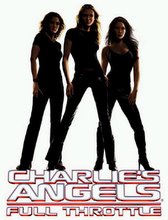
Friday, March 16, 2007

Self-evaluation

Attainment1= I understand the work that’s being done at the moment quite well. The slasher genre is interesting and i have made useful points which i can share in the class.

Effort1=
this is because I put as much effort I could into the subject. For example, for my blog work I have put a lot of effort in to it as I enjoy this area. I also put a lot of effort into my homework and classwork and make sure i understand it before i leave the lesson.

Punctuality1=
my punctuality is good as I try and arrive to lessons on time and try and avoid being late. I also don’t take of much of school, only is if have a appointment, if I am ill, or i have a interview. otherwise I attend most lessons so I don’t miss out on my work.

Submission and quality of homework 1=
the homework I hand in had been good quality as I highlight all the sheets I receive and hand in homework all of the time. I always hand in the homework set that needs to be on the blog as I enjoy doing blog work.

Ability to work independently1=
I think I work well independently as this can be seen by looking at my blog research I have done independently so far for it.

Quality of writing 2/3=
the quality of my writing is not good however i am improving it slowly. I will know the quality of writing when we start doing more writing in lesson, such as for the school magazine.

Organisation of Media folder1=
I think my media folder is good because as soon I get sheets in lesson I put them in a folder so they don’t get lost. I also put my sheets in order of when I got them so they are in order and making it neater. I also bring all my sheets to lesson for both Med 4 and Med 6 so I could refer back to it and will have it with me when I need to have it for the lesson.

Oral contributions in class 2= I think that I need to contribute to lessons more when I no the answer however I do think I contribute more, or try to this year than last year, although it isn’t enough. I do contribute more in Med 4 lessons but not in Med 6.

Standard of module 5 blogs 1= the standard of my module 5 blog is very good as I have kept up with all my homework as is good quality with a lot of detail. I have also done a lot of self directed research which will help me with my independent study. I have also tried to make it attractive my adding colour and have a lot of pictures on my blog. I keep looking ofr research o improve on my independent study.
Standard of Module 6 blog 1= This is because the work I have done is improving on the blog and in more detail. I also put more effort into it now. I also have added pictures and used a variety of fonts to make it look nice to look at.

List of three targets/areas for improvement:
To contribute more in Med 6 lessons
Put more effort in class Med 6 lessons
To maintain at the same level throughout
Intertextuality in Charlie’s Angels:

In order to understand the dynamics of Charlie’s Angels, audiences need to be familiar with some of the conventions from the detective genre. It is assumed in the film that the audience are familiar with the idea of ‘undercover agents’ and indeed are expecting the see the central characters in different disguises in order to gain access to information. It is also assumed that audiences anticipate the use of high tech gadgetry by the central characters (a tradition that harks back to James Bond). It is interesting to note that both the undercover costumes and gadgetry are used to make the job of a spy look exciting and appealing. In addition to these features Charlie’s Angels also uses the conventions of the car chase sequence and the detonation of a bomb at the end – both of which interestingly appeared in the Charlie’s Angels television series.

This leads us to ask what an action genre is and what are the expectations in terms of schematic devices, setting, characterisation and plot? In what ways does this conform and what are the deliberate alterations to the archetypal action film?

Finally, Charlie’s Angels makes direct reference to other blockbuster films; there are the Matrix inspired kung-fu fighting scenes and even a scene in which one of Charlie’s Angels is wearing a Harry Potter costume. A ploy that is both cheekily post-modern and also appeals to different ‘cult’ groups within a wide audience.

http://wwwfp.education.tas.gov.au/English/word/Blockbusters.doc

Postmodernism in Film (Charlie's Angels-full throttle

But, of course, postmodernism in film hit its high-water mark and began its decline with That Guy. You know who I'm talking about: Quentin Tarantino, the man who re-energized cinema with his intelligent and entertaining postmodern style, and the man whose influence has become so vast and misguided that the success or failure of postmodernism in film hangs in the balance. Am I being too drastic? Do you even care? I guess if you've read this far you do, or you're just really bored at work.A film like Pulp Fiction so shook the foundation of Hollywood that Tarantino became a cinematic example of Harold Bloom's "Anxiety of Influence", meaning that he's such a towering figure that later artists find it impossible to escape from his shadow. Most people think Pulp Fiction's influence began and ended with that slew of hip, neo-noir films like 2 Days in the Valley and other forgettable bullshit. No way. I wish it were so. Those were easy to spot because they're imitating Tarantino right down to the genre. But those aren't the dangerous ones because they're so obvious that they're innocuous. Think QT doesn't influence Charlie's Angels 2: Full Throttle? Think again.

To help understand this better, let's look at a textbook example mentioned earlier: Charlie's Angels 2. This is a film is the cinematic equivalent of Terry Schiavo: it cannot live on its own. Yeah, that was pretty bad, I guess. What I mean to say is that every scene in Charlie's Angels 2 is meant to refer to either another film, video or pop culture phenomenon. Its entrenchment in the fads of the past is almost autistic, but probably more like retarded. It's a revue-style pageant in which we watch four hot women try on a lot of different costumes and re-enact scenes from other movies that we all remember and enjoyed. Not to mention that, on top of all of this, it's a sequel to a film of a TV show.

While the first movie employed some of the same logic, it was done to much more success because it let the audience in on the joke, allowing it to act as reader and "author" in the postmodern sense of the word. While director McG is without a doubt far from being the coldest beer in the fridge, there was a sense of postmodern playfulness about Charlie's Angels that saved it from being a total waste of time. But after its success, the sequel became an ADD-fest that seemed to be made up of skits producer/star Drew Barrymore thought up in makeup that morning ("I just saw Raiders of the Lost Ark last night ... shoot it!"). Let me stress that I firmly believe this to be unconscious. Neither of these folks can spell postmodern, but the point is that this form of postmodernism has become part of the pop culture zeitgeist ... and its approaching entropy. This is the crisis point: a dozen texts stapled together and given a new name, or, worse (and more accurate): a postmodern text without a text.

http://lifegoesoff.blogspot.com/2005/05/essay-title-re-postmodernism-in-film.html

Thursday, February 08, 2007

Does Blogging Help


1. How easy has it been to set up your Independent Study blog and to get used to posting things on it? Were you given enough support in doing it? What other help would have been useful?

Setting up the blog is easy, all you have to do is follow the instructions and takes about 10 minutes. Posting things up on it is not hard either, all you have to do is sign in a go to new post.iI think the help we received not this year but when we made 1 the practical production was good.


2. How did the blog help with your research? Did the blog motivate you to do more and better research? How? Why?

The blod did motivte me to do more work and better research as i didnt have to print the work out but i could edit is and them post key points up. I could also change the colour of the font and put pictures up to make it look nice. By putting my research up on the blog i think this is the rreason i did more research.

3. Is it useful having all the Independent Study/blog tasks posted on the Macguffin blog? Does it make it more likely that you will get them done?

I think it is useful having all the work and tasks up on the blog because then we dont have loads of paper to carry or keep safe. This is the reason i got it done on time as it would luk neater on the blog then on paper.

4. How often (honestly!) do you check the Macguffin blog? (Remember, it should be at least twice/week).

I check the blog almost everyday but occasionally i check it every 2 days to see whats new and 2 post research i have found or do the homework set. I think i check it more now than last year partly because i have the internet at home now.

5. Has it been useful being able to see and access everyone else’s research and planning through their blogs?

Yes. I think it has been useful accessing everyones blog as i was able to get ideas and help, extra research whereas if it was on paper everyone would keep it at home and this wount give eveyone the chence to share research or get new ideas.

6. How do you feel about the fact that your teacher can keep a close check on your progress through accessing your blog? Is it too intrusive and controlling or is it encouraging and supportive?

I think it is encouraging and supportive that the teacher could see what we are doing as it means the extra work we do on the blog doesnt go unnoticed and is motivating.

7. How useful have the comments been that you received from…a. Macguffin, b. other students.

The comment i have received have been very useful and helped me improve my work.

8. How has the blog helped with your essay planning? How useful was the blog when it came to writing the essay? Do you think your first draft is better because you have used a blog?

The essay planning was challenging and as i was able to access all my research together it helped me however to be honest i didint really follow most of it. The blog was very useful when actually writing the essay as all my research was together with all the webistes so the research i did in school i could access at home and the research at home in school. I thnk my first draft is better using the blog because i didnt have to read all my research sheets as all the work was on the blog.

9. How would you evaluate the quality of your blog? What could you have done better?

I think the quality of my blog is good. I have put so much effort into it with the pictures and the colours which motivate me. I wouldnt do anything to improve it.

10. Do you think you will get a better final grade for your independent study through having used a blog?

Yes. I think i will get a better grade because i dont have to worry about printing or saving a website and could just post it up 2 make it easier.

11. Which are the best three blogs? Why?

I think all the blog are good in their own way but the blogs i like are jatinder's, Kalpan's and jaskeerat.

12. Do you think next year’s Year 13s would benefit from setting up an Independent Study blog?

I think it will benefit them a lot and this way they are more likely to go on macguffin more.

13. Are there any negative aspects to preparing for an Independent Study using a blog?

The negative aspects are that there is a chance of not being able to access the interent or if the computer decides to crash at the last minute.

14. What could be done to improve teaching and/or learning in future through blogs?

Nothing

15. Overall, are you pleased that we used blogs? Has it been interesting and enjoyable? Why? Why not?

I am happy we used blogs as it was enjoyable and motivating because we could we was able to brighten it up with colours and picturs.

Sunday, February 04, 2007

“I'd recognise that arse anywhere, you piece of shit” (Seamus ‘o’ Grady)[1]. Are women in Hollywood films represented purely as sex objects to entertain and pleasure men? With particular reference to ‘Charlie’s Angels-Full Throttle’ (2003).

Representation of women has changed over recent years due to feminism, which rose during the 1970’s where women fought for their rights to equality. However, women are still seen subordinate to men, which has resulted in a patriarchal society. Women were being negatively-represented in films such as Alex Forrest in ‘Fatal Attraction’ (Director: Adrian Lyne, 1987), where women were represented as ‘femme fatales’[2]. However, in contemporary society this representation of women is developing within the media, due to women achieving more active than passive roles, which active roles were typically associated with men. This is evident that both the media and society is developing as women have more dominant and active roles. However, this does not stop the fact that women are still seen as tools for pleasure and are shown still in a stereotypical manner in contemporary films such as ‘Charlie’s Angels-Full Throttle’ ( Director: McG, 2003).

The stereotypes that exist in contemporary films are used in subtle ways where those who are media literate will be able to pick these out though the obvious stereotypes are easily noticeable such as the ‘bimbo’. This stereotype is shown in ‘Charlie’s angels-Full throttle’ on Diaz who is represented as a ‘bimbo’[3] and used as a distraction for the men. This representation is used in the very first scene where the Angels show a display of ass-kicking female empowerment[4] using their strength and initiative to save a kidnapped man, a complete role reversal for the representation of women where they were once the ‘damsel in distress’ who were portrayed as vulnerable and weak. Although women are in a more empowering and active roles, they are still subordinate to men as they are mainly seen as the objects of the gaze. This means that are being seen as tools of pleasure and not for their acting ability undermining women’s ability to succeed.
Men are constantly stereotyped as the active, providing and tough individual who drives the narrative forward, whereas the passive, home orientated and emotional
[5] people tend to be the women who is constantly being controlled by the man and is there to make the hero look good providing ‘scopophillic pleasures’ to the audience. This is challenged by contemporary films for example the angels in Charlie’s Angels-full throttle or Patience Phillips (Halle Berry) in Catwoman (Dir: Pitof, 2004). This stereotype is progressing in the media as awareness of women’s ability is becoming more shown in contemporary film such as ‘Kill Bill volume 1 and 2’ (Quentin Tarantino, 2003/2004).

Kill Bill volume 2 (Quentin Tarantino, 2004) is a contemporary action film where the protagonist role is challenged. The antagonist role was once associated with the male gender, however Uma Thurman plays Beatrix Kiddo, a dominant, active and tough women. This is evidence of women’s ability to be just as equal to men as a result challenging a patriarchal society. Representations of women are gradually changing due to the positive role women are being given the chance to be in as a result this film was highly successful making a total of $66,207,920[6] as well as promoting women’s authority, however this film is evidence that the society we live in views women for ‘erotic pleasure’ as she is wearing a yellow, tight suit as a result creating a ‘male gaze’ amongst men. The yellow outfit she is always seen to be wearing can connote happiness. This could represent goodness as oppose to evil creating identification with the audience.

A historical film that represented women with the power they deserved was Alien (Dir: Ridley Scott, 1979), a film produced in the United Kingdom, featured the first female protagonist, Sigourney Weaver who played the active hero and remained the only survivor, was a huge success in the 70’s, the decade for feminists making $1,983,690[7] and has played a major part in the progression of positive representation against women in the media. This film was successful due to the fact that women were finally emerging from their stereotypical roles and not because she was getting objectified or viewed for pleasure as a result this film challenges Laura Mulvey’s theory and proves that not all women are objectified in order to make a film successful. On the other hand, Ripley may have been played by a female but this role was never intended to be played by a female[8] as a result it would have been another male action hero film.

Haskell (1973) points out that directors in 1962 were guilty of having misogynistic views upon women[9]. This would lead to the negative-representation of women and oppressing them. So feminism may have played a major part in the progression to minimise objectification however, but women are still getting viewed for the wrong reasons such as pleasure and degrading them. An example is Basic Instinct (Dir: Paul Verhoeven, 1992), where the spectators are provided with ‘scopophillic’ and ‘voyeuristic’ pleasures throughout and at this time we are introduced with the ‘female gaze’. We also see a misogynist view from Gus Moran (George Dzundza) who constantly calls Catherine Tramell (Sharon Stone) degrading words such as “pussy” and ‘Bitch’,[10] this proves that he does not respect her but uses vile words when mentioning Tramell as a result reinforces a patriarchal society.

The mid-nineteenth century focused on the first wave feminism[11] which was important for women as this was the century in which women decided to change their presence in society for equality[12] and this resulted in the three waves of feminism. At that time, the society was patriarchal in every area, this undermined women. To an extent, the society can be labelled as patriarchal and have a higher authority than women. This is evident in films such as Coyote ugly (Dir: David McNally, 2000). Violet (Piper Sanford) the protagonist and other females are totally controlled by the ‘ogling’ men when she lands a job as a ‘coyote’ bar dancer/sex kitten and waitress[13] at a club. She is seen pouring liquid over herself providing ‘erotic pleasure’ and being the subject of the ‘male gaze’ as theorised by Laura Mulvey[14]. This could also be an example of post-feminism as the females aware of what they are doing and enjoying it so in a way it can be reversed due to the fact they have the will to decide what they want. It could also be interpreted as the females having the competence, capability and the potential to tease the men, this as a sign of dominance from the females rather than males.

To provide entertainment and pleasure for the audience the, films are mediated to attract the attention and by doing this results in the ‘male gaze or even in some cases the ‘female gaze’. Mulvey identified that the ‘male gaze’ resulted in the male viewer to drool over the erotic exhibition of women’s bodies on the screen.[15] Greer (1999) said that women are under much more pressure to impress with their make-up and high heels.[16] This proves that women are passive and are conforming to the ideologies that they are confronted by to impress the opposite sex as a consequent the hypodermic needle model is reinforced.[17] This is reinforced by Charlie’s Angels-full throttle (Dir: McG, 2003), as they are represented as three attractive angels who ‘kiss ass’[18] having the active role but being objectified at the same time.

Charlie’s Angels-full throttle, Kill Bill, Coyote ugly, Catwoman all attract different audiences. The genre of the film decided the audience and as a result we are shown an active audience. ‘Uses and gratifications theory’ could be applied to these films as they all provide the audience will escapist entertainment. This can be seen in Charlie’s angels-full throttle, which stars beautiful and glamorous women who can also ‘kick asses and perform the role of the action hero. [19] This theory assumes an active audience where individuals chooses the text it consumes and have dissimilar reasons for consuming the films. The primary audiences are teenagers who appeal to an action/adventure genre. The secondary audience would be feminists and fans of the actors/actresses.

Gaye Tuchman (1978) states that that females are represented far less than males on TV. Tuchman also stated that when females have roles, they are mostly shown as being negative roles[20]; he called this ‘symbolic annihilation’. This can be challenged to a certain extent as protagonist woman are becoming more common in contemporary films as a result however they are still being shown in negative roles such as the ‘objects’. The human characteristics are being taken away from them leaving them as the tools of desire to entertain and pleasure.
‘Phallic’ objects are widely used in films such as Kill Bill, Catwoman, Lara croft: Tomb raider, coyote ugly and Charlie’s Angels-full throttle. These are either ‘phallic’ or ‘fetish’ objects that create the ‘male gaze’ resulting in women being represented as object of desire. An example is in ‘Charlie’s Angels-Full Throttle’ where they are seen in a club called the treasure chest. The angels in the film fight crime without the use of guns seen as a ‘phallic’ object however; they use ‘phallic’ objects to manipulate the men in this scene. They are seen seducing the men by dancing alongside a pole in ‘skimpy’ outfits and jiggling breasts, wiggling bums
[21] causing the ‘male gaze’. This means that they use ‘phallic’ objects for ‘eye candy’[22] for the men but not to help them fight crime as a result it means that they are shown as sex objects.

Action films have slow motion to create enigmas within the film; a code theorised by Barthes. An example is when the angels’ fall off a building after being shot. This is an alternative to keeping the audience engaged and entertained besides the ‘eye candy’ (women). However, in Charlie’s Angels-full throttle, these interlink with each other. The desirable object being Diaz running along a beach in a bikini suit played in slow motion. She is being portrayed as the “to-be-looked-at-ness”[23] object meaning that they are being shown as a figure to be gazed upon.
Mulvey argues that women are viewed in two ways from the spectator: voyeuristically and fetishistic. This leads to the Freudian theory in terms of males feeling ‘castration anxiety’
[24]. In Charlie’s angels the substitute is the pole in which they dance alongside. This provides ‘erotic’ pleasure as the heterosexual spectators are given a buzz to satisfy their urges. Kaplan and Kaja Silverman (1980) argued that “the gaze could be adopted by both male and female subjects: the male is not always controlling the subject and nor is the female always passive object”[25]. This challenges stereotypes against women and patriarchy.

An example is Basic instinct (1992), where the spectator is provided with the ‘female gaze’ of a naked Nick Curran (Michael Douglas), this in contrast administers ‘erotic’ pleasure for the female audience. This film is also a prime example for patriarchy as it challenges the passive female who is Tramell (Sharon Stone).

Ridley Scott, the director of Alien directed a film called Thelma and Louise (1990). In this film as well as Alien features female protagonists. In this film the two women could be categorised in two groups. The ‘whore’ and the ‘Madonna’[26]. The two females had freedom and lived independently. Louise was portrayed as the ‘Madonna’ as she was the housewife, a role given to her by her husband as a result reinforcing patriarchy. Thelma is represented as the ‘whore’ who is carefree that she almost got raped and gets no respect from the males[27] “Bitch! I shoulda gone ahead and fucked her!” (Harlan)[28]. Feminists could argue that due to this, women belong in the home as they can’t look after themselves without the male figure.

An alien (Dir: James Cameron, 1986) features Ripley once again in the stereotypical roles of a mother. This is also seen in contemporary films such as Kill Bill 2 who woke up form a coma to find her baby had gone. Even though these women are in active masculine roles rather than the passive roles, they are being represented in a stereotypical manner. This means that women are presented stronger as they can bring up a child had also fight evil and protect them.

Emanuel Levy (1990) conducted a study and concluded that physical looks and youth were far more important for the female stars. This as a result puts pressure on females to look pretty to attract a male audience. This means that women need to conform to what males want reinforcing a patriarchal society. However, female groups such as destiny child are advertising female empowerment hoping it may progress the existing representation of women not as sex objects but as empowering, strong and independent women crushing misogynist views that are present in society.

Women are judged according to their looks however men are judged according to their acting skills. Sharon Smith (1972) declared “The role of woman in a film almost always revolves around her physical attraction and the mating games she plays with the male characters”[29]. This means that women have to try harder to gain attention from the audience and a way in which they can be ale to achieve this is by using their physical attraction to appeal to the audience making harder for woman to succeed than men.

Destiny’s Child promoted ‘girl power’ by releasing a song that was a soundtrack to Charlie’s angels called ‘independent women’. This was helping women gain the correct position in society. Pink also had a synergy by releasing a song called ‘feel good thing’. The representation of pink could promote ‘girl power’ as she is a woman who can speak her mind and as tough as a male promoting equality which could be the first signs of progression. On the other hand, David Gauntlett argued that female role models such as destiny’s child are glamorous[30] as well as successful, this providing voyeuristic pleasure whatever role women are in. It means for women, males are entertained by them due their body features rather than their ability to act.

Gauntlett (2002) later argued that “movie producers have realised that kick-ass heroines do better business. Her also realised that audiences would laugh at images of pretty housewife and reacted by showing women how to be sexy at work[31]. This could be interpreted as women need to look sexy as well as kick ass or audiences would laugh at images of housewife roles. This concludes that society had moved on in terms of the representing women in stereotypical roles as this is no longer accepted in society as correct however thy do need to look good in appearance.

The angels are associated with their simpering, body-grinding bikini-clad tits n' ass. The girls are shown as empowered but repeatedly using their looks to distract and outwit the pathetic men on parade in the film[32]. This as a result means that they can use their looks to distract men, which is used as a tool to help them. As a result woman are represented in more intelligent roles than men as they use their intuitive to fool the men and gain control power over them for their benefit whereas men are shown with a weapon such as a gun to guild them. This could mean that women are getting themselves objectified in order of achieving what they wanted.
Charlie in ‘Charlie’s Angels-full throttle’ could be represented a Marxist he is dominant and rules
[33] the angels; they are under his power. This could be seen as a concept of hegemony[34]. This is because the angels are ‘Charlie’s’ angels who are controlled by a mysterious male voice as a result they can be seen as passive reinforcing Mulvey’s theory on active/male and passive/female.

At 40, Demi Moore plays a ‘fallen angel’[35] in an antagonist role following propps theory on character roles. This can be linked with Claude Levi Strauss theory on binary opposition[36]s as they clash. The hero versus villain can be labelled upon the angels and Madison Lee (Moore). This binary opposition is used in the film for the identification by audiences. Moore is shown to be wearing black, which can be connoted an evil whereas Diaz alongside Moore is wearing white which can be connoted as purity and heavenly associated with angels, which represents what they are.

‘Charlie’s angels –full throttle’ has a non-linear narrative as there are flashbacks of the angels before they worked for Charlie, living the nostalgic memories of the past of the angels, this helps the audience identify with the characters and not feel alienated. Parts of the film follow Todorov’s narrative structure. Most of the films end with a resolution such as Alien getting defeated or in Kill Bill where Bill finally dies however some films do not follow this. An example is Basic instinct where Tramell doesn’t die.

To justify the reason why women are presented as passive objects could be due to the lack of female directors. As there are only a few female directors, the audience are shown the film form a male point of view. This means that what ever the director wants to see gets shown as a result women are shown in tight clothing, revealing and with ‘phallic’ objects. Naomie Harris quoted “film is such as male-dominated industry”[37]. This results in women being negatively represented and reinforcing a patriarchal society.

Overall, women are increasingly seen in films in a male associated role of action hero or protagonist however, even though they are in these roles they are represented as sex objects with the use of ‘phallic’ or ‘fetish’ objects with the main aim to attract heterosexual males in gaining pleasure and entertainment. On the other hand, not only the males are given these pleasures as now there is also a ‘female gaze’. An example of this is in the recent James Bond film, ‘casino royale’ where Bond (Daniel Craig) is dripping wet coming out of the water a complete role reversal that was once seen with Halle Berry. This concludes that not only women are objectified though the majority are women so a patriarchal society is still present.

Word count 3,051

[1] Charlie’s Angels –Full Throttle (2003)
[2] http://www.peom.co.uk/femmefatale.html
[3] http://www.moviehabit.com/reviews/cha_f703.shtml
[4] http://www.movieviews.org/reviews/may-july2003.shtml
[5] A2 Media studies: the essential introduction pg. 227
[6] http://movies.yahoo.com/movie/1808504212/info
[7] http://movies.yahoo.com/movie/1800020133/details
[8] Lacey, Nick ‘Image and representation’ pg.218
[9] Nelmes, Jill (1996) ‘An introduction to film studies-third edition’ pg. 248
[10] http://en.wikiquote.org/wiki/Basic_Instinct_(film)
[11] Bennett, Peter (2006) ‘A2 Media Studies: essential introduction’ pg. 229
[12] Bennett, Jacquie (2005) ‘Media Studies AS & A2’ pg. 108
[13] http://www.imdb.com/title/tt0200550/plotsummary
[14] Mulvey, Laura (1975) ‘Visual pleasures and narrative cinema’
[15] Bennett, Peter (2006) ‘A2 Media Studies: the essential introduction’
[16] Gauntlet, David (2002) ‘Media, Gender and identity’ pg. 78
[17] Bennett, Jacquie (2005) ‘Media Studies: AS & A2’ pg. 86
[18] Gauntlet, David (2002) ‘Media, gender and identity’ pg 66-67
[19] Gilligan, Sarah (2003) ‘Teaching women and film’ pg. 25
[20] http://en.wikipedia.org/wiki/Symbolic_annihilation
[21] http://www.empireonline.com/reviews/review.asp?DVDID=9572
[22] http://www.bullz-eye.com/mguide/reviews_2003/charlies_angels_full_throttle.htm
[23] http://en.wikipedia.org/wiki/Laura_Mulvey
[24] http://www.aber.ac.uk/media/Documents/gaze/gaze09.html
[25] http://www.aber.ac.uk/media/Documents/gaze/gaze09.html
[26] http://www.screenonline.org.uk/film/id/824016/index.html
[27] Rayner, Philip (2004) ‘Media studies : the essential resource’
[28] http://www.imdb.com/title/tt0103074/quotes
[29] Gaunlett, David ‘Media, gender and identity’ pg. 48
[30] Bennett, Jacquie (2005) ‘Media Studies: AS & A2’ pg. 109
[31] Bennett, Peter ‘A2 media studies: a essential introduction’
[32] http://www.dailyinfo.co.uk/reviews/feature/504/Charlies+Angels+Full+Throttle/
[33] Bennett, Jacquie (2005) ‘Media Studies: AS & A2’ pg. 111
[34] Gauntlet, David ‘Media, gender and identity’ pg. 69
[35] http://movies.yahoo.com/movie/preview/1808403424
[36] Bennett, Jacquie (2005) ‘Media Studies: AS & A2’ pg. 92, 93
[37] http://www.guardian.co.uk/print/03855141912_06368000.html

Tuesday, January 30, 2007

Research on Charlie's angels-full throttle!


...director turned action auteur McG exists for one reason and one reason alone: to put beautiful girls (Cameron Diaz, Lucy Liu and Drew Barrymore) in front of the camera and have them be sexy and tough. With Full Throttle, McG has simply refined the formula he used in the first Charlie's Angels movie, jettisoning intrusive elements like plot for bigger action and skimpier bikinis.


The Townsend Agency and its operatives, tough girl Dylan (Barrymore), brainiac Alex (Liu) and athletic ditz Natalie (Diaz), are hired to get the rings back leading to all sorts of mayhem and outrageously sexy situations (including a dance routine in a San Pedro Harbor establishment called the Treasure Chest).


Dumb, hyper-sexed, overproduced, loud, out of control and with no story, Full Throttle is the perfect summer movie for the MTV generation.


http://www.boxofficemojo.com/reviews/?id=38&p=.htm

A different article...
Even the film's endless reduction of women to simpering, body-grinding bikini-clad tits n' ass is counterbalanced (somewhat disingenuously) by the fact that these girls are empowered, repeatedly using their looks to distract and outwit the pathetic men on parade in the film (and perhaps in the audience)...

...Mr Munday into believing that she is a sex worker. Of course the real joke is not so much that he is completely wrong, as that he is in fact half right, since the Angels are really both sexual objects and independent women at the same time.

http://www.dailyinfo.co.uk/reviews/feature/504/Charlies+Angels+Full+Throttle/

Sunday, January 28, 2007

My whiteboard

http://123.writeboard.com/f1606c666255c4f91

Kiranjit's whiteboard

http://123.writeboard.com/bf0671b388018831f
Self evaluation

Attainment1= I understand and enjoy the work that’s being done at the moment quite well.

Effort2= because I put as much effort I could into the subject however I can put more effort. For example, for my blog work for the independent study I have put a lot of effort in to it as I enjoy this area. In lessons I understand the work however I need to put a lot more effort in to my class-work.

Punctuality1= my punctuality is good as I try and arrive to lessons on time and try and avoid being late. I also don’t take of much of school, only is I have a excuse such as an appointment or if I am ill, otherwise I attend most lessons so I don’t miss out on my work. If i do miss work, i get the work off someone else in the class.

Submission and quality of homework1/2= the homework I hand in had been good quality as I highlight all the sheets I receive and hand in homework most of the time. I always hand in the homework set that needs to be on the blog as I enjoy doing blog work.

Ability to work independently1= I think I work well independently as this can be seen by looking at my blog research I have done independently so far for it. This gives me the chance to express my ideas and lay the work out the way i prefer.

Quality of writing2/3= the quality of my writing is not that good however this is an accurate grade. I think my writing skills need to improve especially essay writing. I will know the quality of writing when we start doing more writing in lesson, such as for the school magazine. The independent study will help me with improving my writing.

Organisation of Media folder1= I think my media folder is good because as soon I get sheets in lesson I put them in a folder so they don’t get lost in order i get them. I also put my sheets in order of when I got them so they are in order and making it neater. I also bring all my sheets to lesson for both Med 4 and Med 6 so I could refer back to it and will have it with me when I need to have it for the lesson.

Oral contributions in class2/3= I think that I need to contribute to lessons more when I no the answer however I do think I contribute more, or try to this year than last year, although it isn’t enough.

Standard of module 5 blogs1= the standard of my module 5 blog is very good as I have kept up with all my homework as is good quality with a lot of detail. I have also done a lot of self directed research which will help me with my independent study. I have also tried to make it attractive my adding colour and have a lot of pictures on my blog.

Standard of Module 6 blog (Year 13s only)1/2= This is because the work I have done so far on the blog is not as detailed as it should be however I do put my effort into it but not as much as I could. I also have added pictures and used a variety of fonts to make it look nice to look at.

list of three targets/areas for improvement:
To contribute more in lessons when i know an answer
Improve my writing skills
Put more effort in class

Thursday, January 11, 2007

Kiranjit's blog-feedback...


She has a lot of information of her main text including articles. This gives her the chance to see others views on the film and maybe give her ideas to help her.

She has so much information on other texts such as historical texts and contemporary texts. This will give her the chance to compare the texts and see the changes over time.

To help with the other side she could get information on the other side of the argument such as how women’s roles haven’t changed. So far kiranjit has information on how the roles are changing in films and included texts to prove this such as Alien, a text that I will b using for my historical text.

Kiranjits first paragraph is good, straight to the point which is good because you would want to talk about things that is irrelevant. The plan is well set out and easy to follow and understand. This will make it easier for her to write her essay. It detailed and well structured so she knows what she has missed out and what goes where.
'Female gaze', 'Male gaze', Misogyny, Homesexuality...


Basic Instinct… Paul In "unedited" form, Basic Instinct became the highest-grossing film in the entire European continent; and even with half a minute of blush-inducing athletics shaved off, the American version constituted enough of a scandal to ensure its box-office success.

The film's primary draw is, of course, sex. Instinct's implied contract with the audience is, you give me six bucks, and I'll make you start smoking again. But sex along does not a legitimate feature film make. Its payola is disguised under a crazy-quilt of social criticisms, all of them enormously suggestive, but none of them complete. You may think you're just getting an eyeful of flesh and an earful of f-words, but you're also leaving with plenty of cultural baggage that demands unpacking.


Some say Verhoeven promotes misogyny by infusing every female character with homicidal impulses. Others praise him for posing Catherine Tramell as the new liberated woman who plays the games of man's world better than men themselves. Queer Nation and other gay-rights organizations castigate the film for a negative portrayal of homosexuals as murderous psychotics. Meanwhile, lesbian writers in the Village Voice herald Catherine, Roxy, and Lisa/Elizabeth as exciting and empowering characters. Plenty of outraged viewers decry the film's sexual intensity and inventiveness, whereas my French grammar professor in Paris last semester applauded it for being an "excellent mirror to the collective unconscious." A closer look at the narrative makes for a flow-chart nightmare, such that we can never know the agent behind the misandrist murders. Eszterhas has obviously forgotten that narrative ambiguity has no place in a murder mystery, for another promise of the genre is that we will ultimately be rewarded with answers. Such irresponsible filmmaking allows us to interpret the film's comments on the relationship between gender and power any way we see fit. And therein lies the film's moral danger.

A simple plot summary poses the tale as a triangle of lust, in which San Francisco detective Nick Curran (Michael Douglas) vacillates between the wiles of his police department's psychiatrist, Dr. Elizabeth Garner (Jeanne Tripplehorn), and those of his current case's prime suspect, the popular novelist Catherine Tramell (Sharon Stone). Curran's hormonal dilemmas are framed by the murder of a retired rock singer, Johnny Boz, who was stabbed during sex thirty-one times with an ice pick. Tramell is suspicious on two grounds: she was Boz's last companion, and the murder echoes the plot of her last book, Love Hurts, about "a retired rock-and-roll star who gets murdered by his girlfriend" with the selfsame chilly instrument. The premise makes for an excellent good-guy versus bad-girl tale, but Eszterhas complicates things by shading Curran's own character. Curran is a recovering cocaine buff and alcoholic who is required to meet regularly with Dr. Garner after "accidentally" shooting several tourists while drugged-up on duty. His dark past makes him attractive fodder for Tramell's nexy project, entitled Shooter, about a detective who "falls for the wrong woman." Such an omen fails to convince Curran to keep his loins away from her, unfortunately, so we wait for him to be perforated.

Basic Instinct leaps from man's world into, so to speak, the lap of women. The film's predominantly male perspective is suggested by the continual presence of the ever-phallic Prudential building outside of Curran's apartment window. Verhoeven launches the plot from Curran's point of view, then spends the rest of the film subverting it. For this is not a story about Curran; though he may be the protagonist, he is not the hero. This film is about women, and specifically a new breed of women epitomized by Catherine Tramell, who is Instinct's truly triumphal character with whom we are meant to identify. Curran is not even remotely likeable; and gradually it becomes clear that Verhoeven intends for Curran to represent the worst element of male heterosexuality: complacency. Curran rests blindly secure in his belief in male dominance, unwilling to be threatened by a mere woman, whose importance to him fluctuates according to his need. It is not a sense of justice that gravitates Curran to Tramell - it is egotistical lust, the heedless physical need that so characterizes the male population. Tramell is fully aware of man's primum mobile, and this knowledge becomes her trump card over her victims.


Tramell's manipulation of the "male gaze" subverts one of society's most basic societal power structures, the idea that it is men who do the watching, and women who are reduced to less-than-three-dimensional images. Even her female rivals and lovers entertain such a role reversal: Elizabeth Garner's apartment overlooks a ladies' dance class, and Roxy's taste for watching Catherine make love to other men completely flips our visual conventions. "She likes me to watch," Roxy argues, and later when Catherine takes apart a block of ice for her drink with her favorite weapon, she exposes Nick's potentially tragic flaw with a question: "You like watching me, don't you?" It is now women who run the show. When Nick secretly watches Catherine strip at her living room window, she turns the light off. Finally, Verhoeven's most brilliant comment on man's scopophilic downfall takes place in the film's very first scene: Johnny Boz and his soon-to-be-killer make love underneath his ceiling mirror, from which he undoubtedly enjoyed watching his own amorous adventures, and from which he now witnesses his own murder. (In the unedited version, Boz receives an ice pick in the eye, further punctuating Verhoeven's statement.)

I would be a fool to ignore Basic Instinct's classic contribution to film history, however: the notorious interrogation scene between Tramell and several detective remains one of the most gripping and scandalous moments of Hollywood's past decade - known as the "gratuitous beaver shot" that launched a thousand ships, as well as Sharon Stone's career. The scene becomes a metaphor for woman's place in the world, as she single-handedly matches wits with five men - and reduces them to Jello®. The event is essentially pornographic, with five men throwing their gaze on a beautiful woman and trying to dominate her. And Tramell knows it, of course. As she unnecessarily elaborates on her sexual practices, her inquisitors begin to sweat and lick their lips. "He [Johnny Boz] gave me a lot of pleasure," Tramell notes, taking man's place as the one who should receive the pleasure. When Assistant District Attorney John Correli asks if she ever engaged in sadomasochistic activities, Tramell refires, "Exactly what did you have in mind, Mr. Correli?" The room gets hotter, and the detectives run for the water cooler. And when Tramell finally delivers the coup de grace by uncrossing and re-crossing her legs sans undergarments, the pornographic role-reversal is complete: the guys may get a look, but it is she who benefited, as the men find themselves unable to continue the cross-examination. Tramell succeeds in passing through her accusers' fingers by playing to their basic instincts.

Tramell denies anyone the advantage even in conversation, for in every scene where Curran questions Trammel, she fires back with her own barrage of inquiries into his personal life, always maintaining a balance of information. Curran becomes defensive: "You seem to know a lot about me," he observes. "You know an awful lot about me," says Trammel. "I don't know anything that's not police business," he counters. "You know I don't wear any underwear, don't you Nick?" And she exposes along the way man's eternal double standard that sexually active men are "studs" whereas unvirginal women are "whores":

What Basic Instinct has offered was wide range of reactions from audiences. In particular, there is a great amount of "whodunit?" side-taking among fans of the movie. Though the narrative potholes effectively discombobulate both sides' arguments, Eszterhas clearly intends for either Tramell or Garner to be pegged as the killer; the fact that they never appear together in a scene also suggests this dualistic narrative intent. The film's inconsistencies allow for a myriad of interpretations, however, and dangerously transmit contradictory messages about female representation. Exploring both camps' position better illustrates Basic Instinct's paradoxical stance toward women.

To leave it in Tramell's hands is certainly an attractive simplification. Here surfaces a central issue of the film: is she, though guilty, a model femme fatale or a misogynist and homophobic example of lethal and lunatic lesbianism? This question is answered by one's interpretation of the final scene: does Tramell, out of love, renounce her serial killing, or merely decide to kill Curran later?

The issues of homosexual representation, misogyny, and graphic sexual depiction are subordinate to the film's greater implications. This is a film about a new wave of women who know what men want and who intend to fulfill their own desires by way of this knowledge. Curran's anxiety and paranoia thus speak for all men who are growing progressively aware that they might have as much to fear from their girlfriends as women fear from their traditionally stronger boyfriends. Despite Basic Instinct's empowering elements, however, Verhoeven allows for several sensationalistic excesses which are far from complimentary toward women. Careless imagery constantly threatens to overwhelm the picture, such as stereotypically dyke-ish lesbian characterizations and at least one thoroughly discomfiting instance of date rape.

Thursday, December 28, 2006

Task 14...
First paragraph
Are women in films represented as sex objects to entertain and pleasure men, with particular reference to Charlie's Agels-full throttle (2003)?
The representation of women has changed since many years; the main reason due to feminism arising during the 70’s where women fought for their rights of equality. However women are still being treated as subordinate to men, as a result reinforcing a patriarchal society. Women were being under-represented in films such as Alex Forrest in Fatal attraction (Dir: Adrian Lyne, 1987), where women were represented as femme fatales [1] however this representation is developing as femme fatales are becoming less frequent with the rise of women in active roles, a role men were seen to be linked with. This is a sign of development in the representation of women, however this does not stop the fact that women are still being viewed for pleasure and in stereotypical ways in contemporary films such as Charlie’s Angels-full throttle ( Dir: McG, 2003).
Task 13...
Detailed essay plan
Are women in films represented as sex objects to entertain and pleasure men, with particular reference to charlies angels-full throttle (2003)
NOTES:

Main text: Charlie’s Angels-full throttle
Ø Angels in active roles-challenges patriarchy
Ø Action film- Male dominated genre=reversed
Ø Active however being objectified- e.g. treasure chest scene
Ø Post-feminismCharlie is a male- angels being controlled= reinforces patriarchy
Theorist:
1. Laura Mulvey- active/male and passive/female is challenged
2. Reinforces the male gaze=objectification
3. Todorov- has a non-linear narrative= has flashbacks
4. Has a resolution- angels (women) winning over villain (man and women)
5. Levi Strauss- Binary opposition between good vs. evil, women vs. man and hero(s) vs. villain(s)
6. Roland Barthes-enigma used to keep audience entertained
Other texts:
Kill Bill- Female protagonist, active role, sword seen as phallic object, gives her power and authority

Coyote ugly- objectification of women in a bar, dancing on platform, liquid poured over women, male spectator gains male gaze.

Catwomen- Female protagonist in active role rather than passive, wearing leather cat suit, tight reinforcing the male gaze, uses a whip at times seen as phallic object.

In conclusion most women in active roles are still being objectified in contemporary film; this concludes that society is still patriarchal.

Historical texts:
Alien- First film to feature a female protagonist in an active role, intended for a male, during the time of second wave feminism, little objectification.

Basic instinct­- women seduces the cop to gain what she wants, has power using her body, challenges patriarchy, shown naked as scenes and men given chance to seek pleasure from this- male gaze.

Coffy- female cop in active role, has power, has authority, objectified due to the clothes she wears, revealing and reinforcing Mulvey’s theory.

Fatal attraction- Has a femme fatale in the film, tries to ruin the life of others, she is manipulative, gets obsessed, and receives the punishment she deserves, a resolution for audience, the usual ending of a femme fatale.
My independent study focuses on the representation of women in films so I decided to choose Charlie’s Angels are my main text. The reasons for this is because in this film, they are sexually objectified, however are shown in an active role challenging a patriarchy. Stereotypes are used in the films to help the audience identify with the characters. These representations are sometimes not accurate but a repeatedly used against women. (R, Id)
Other texts I will be using as key examples in answering my question are Charlie’s Angels, Kill Bill and coyote ugly. The historical texts I will be using are Alien, Basic instinct and Fatal attraction. I will make points on other texts such as Vertigo as this film has a femme fatale, and coffy, an action film with a female in an active role, and supergirl, an action film with a female protagonist. (G, His, R)
Firstly I will mention general things about women in society using key words. I will include my hypothesis for my independent study and the representation of women in films and the stereotypes on them and the representation of men and the stereotypes of them. This will give me the chance to compare and help me further. (R)
I will introduce my main text, how it reinforces the ‘male gaze’ and the representation of women and its genre e.g. action is the genre and this is a male dominated genre. I will then go on to talk about how this is changing in films. Then I will talk about the features of this genre relating to women, in this case action. I will talk about the historical text Alien (1974) and how this was the first film to have a female protagonist. Using this film as an example I will they link it with the stereotypes of women in the 70’s and feminism, what this created? (R, G, His)
I will further my research on feminism and how this started, what women wanted and how this as improved contemporary society. I will mention the World War II, and how this gave women the chance to do jobs men were doing. During that time women were controlled by men, lacking freedom. Then I will link the top paragraph with this paragraph by having Alien as a historical example and comparing it with my main and contemporary text, Charlie’s angels-full throttle. (His, Soc, Pol)
I will have both sides of the arguments for my chosen question I intent to answer. The first being that women are shown in ways that encourage the male gaze and results in them being objectified even if they are in an active role. The other side of the argument is that women are being objectified but it can be seen as post-feminism, where women allow themselves to be viewed by the spectators. (Mulvey, R, A, Id)
Why? How?
  • Women may get objectified in films due to lack of female directors. This results in us as an audience seeing scenes from the perspective of the director, a male in return, the female is represented as an object for desire, to be looked-at-ness as Mulvey states. (R, A, Mulvey)
  • This attention by the males upon the females could be seen as empowerment for the female, from a post-feminist point of view. The female controls the male as he gazes upon female’s body, thus giving female the pleasure as well as power over the man. She may be objectified, but from the view of the male. ( A, R)
  • Reinforcing the ‘male gaze’ allows the women to distract, manipulate men, a role taken on by femme fatales in films. Femme fatales give a bad judgement on women as a result the home sound like a better place for them. They can use their bodies and looks to distract men in order of gaining something in return. An example is in Charlie’s Angels-full throttle, the scene in the treasure chest, the angels distract the men by giving the men what they want as a result this reinforces the male gaze. This example could be seen that women use their bodies as weapons such as for distraction in the example above. (R, Id, example)
  • The clothes worn also encourage the reinforcement of the ‘male gaze’. The fetish and phallic objects used in films, especially in action films reflect Laura Mulvey’s theory. (M, Mulvey, G)

In order of objectifying women, the camera positioning and mise-en-scene is very well used. Slow motion is used in Charlie’s Angels-full throttle, I will mention how this was useful in gaining the gaze and other connotations within the mise-en-scene, e.g. Diaz is wearing white and Moore is wearing black. This can be followed by Todorov’s narrative theory as the angels promoted by the white (Diaz) win over evil in white (Moore) as a result a resolution is achieved. The audience are then given the chance to identify with the film as justice is given. (M, Mulvey, Strauss, Todorov, G)

I will follow this by mentioning the connotations of these colours and how the audience can identify with them. By doing this, I could mention Levi Strauss theory on binary opposition between good vs. evil. Sow motion is also used to create enigma as a result to keep audience entertained (M, Strauss, Barthes)

Kill Bill and Tomb raider etc… promote power for women (female power). This as a result promotes equality between men and women and challenges patriarchal society. These films are under the genre of action. This genre is associated with men, an active role and this being reversed in these films. (Pol, Soc, Id, G, R)

The action films where women are in active roles rather than the stereotypical passive roles have all been successful making a lot of money. The use of special features makes it an expensive film, a high budget Hollywood film, the successful institution called Columbia pictures, owned by Sony pictures entertainment. The film offers the audience to watch something different and women are finally getting noticed in society from contemporary films. (Econ, G, R, Soc, I)

Flashbacks are used in the film as a result has a non-linear narrative. The flashbacks help identify with the characters, as the audience are given the chance to bee the past about what the angels are like. They either challenge stereotypes on women such as Barrymore associated with cars, something men are associated with. (N, R, A)

Is there a ‘female gaze’?

The films Coyote ugly and basic instinct are different genres to the other films however theses films also create objectification of women. They are sexually objectified. However in basic instinct, there is a ‘female gaze’ as well as Mulvey’s ‘male gaze’. This is then developed in the latest casino royale; bond is coming out of the water, a scene previously shown by Halle berry. (R, G, Mulvey)

Is ‘male gaze’ bias?

The paragraph could then be extended by elaborating that the society could be seen as differently in terms of objectification. Females get objectified however we are still seeing men getting objectified as well as women, however more women than men. This female gaze did not exist before as a result… (R, Mulvey, Soc, His)

Conclusion...

I will answer my hypothesis from my introduction as well as answer the question using my text as my main exmaple. I willl back this up by giving examples and including theorists that are relvent.